Thursday, January 10, 2013

8 Reasons to Eat Fermented Foods

1. Fermented foods improve digestion.

Fermenting our foods before we eat them is like partially digesting them before we consume them. According to Joanne Slavin, a professor in the Department of Food Science and Nutrition at the University of Minnesota, “…sometimes people who cannot tolerate milk can eat yogurt. That’s because the lactose (which is usually the part people can’t tolerate) in milk is broken down as the milk is fermented and turns into yogurt.”

2. Fermented foods restore the proper balance of bacteria in the gut.

Do you suffer from lactose intolerance? Gluten intolerance? Constipation? Irritable bowel syndrome? Yeast infections? Allergies? Asthma? All of these conditions have been linked to a lack of good bacteria in the gut.

3. Raw, fermented foods are rich in enzymes.

According to the Food Renegade blog, “Your body needs [enzymes] to properly digest, absorb, and make full use of your food. As you age, your body’s supply of enzymes decreases. This has caused many scientists to hypothesize that if you could guard against enzyme depletion, you could live a longer, healthier life.”

4. Fermenting food actually increases the vitamin content.

According to the Nourished Kitchen blog, “Fermented dairy products consistently reveal an increased level of folic acid which is critical to producing healthy babies as well as pyroxidine, B vitamins, riboflavin and biotin depending on the strains of bacteria present. [1. Vitamin Profiles of Kefirs Made from Milk of Different Species. International Journal of Food Science & Technology. 1991. Kneifel et al]“

5. Eating fermented food helps us to absorb the nutrients we’re consuming.

You can ingest huge amounts of nutrients, but unless you actually absorb them, they’re useless to you. When you improve digestion, you improve absorption.

6. Fermenting food helps to preserve it for longer periods of time.

Milk will go bad in the fridge but kefir and yogurt last a lot longer. Sauerkraut, pickles and salsa will keep for months. And if you’ve got a huge batch of produce in your garden that you don’t know how to use up — ferment it!

7. Fermenting food is inexpensive.

There’s nothing fancy required for this hobby. And many of the foods required to make these recipes are very cheap. You can use inexpensive cabbage to make sauerkraut, or get yourself a kombucha scoby and with just pennies’ worth of water, sugar and tea, you’ve got a health elixir slash soda pop.

8. Fermenting food increases the flavor.

There’s a reason humans enjoy drinking wine and eating stinky cheese. There’s a reason we like sauerkraut on our hot dogs and salsa on our tortilla chips. It tastes good!

  Enjoy!

Wednesday, December 12, 2012

Cherry Ripe Trifle


A Berrylicious and coconut jelly with chocolate custard and chunks of chewy protein toffee.
A delicious cool dessert to enjoy in the hotter weather - it's high protein, sugar and carb free.

 
Berrylicious and raspberry jelly
200mls of strong raspberry or apple flavoured tea (I used Serendipi-tea's "
Chaucers Cup")
2 serves (4 scoops) of Ultimate Slim in Berrylicious
1 satchet of powdered gelatine
200mls of coconut water

Chocolate custard

400gm of low fat cottage cheese
1.5 serves (3 scoops) of Ultimate ISO in Belgian Chocolate
1 tablespoon of cocoa powder
1 egg yolk

Chocolate toffee

1 scoop (1/2 serve) of Ultimate ISO in Belgian Chocolate
60g coconut butter
1 tablespoon cocoa powder
1 tablespoon psyllium husk

Organic dessicated coconut to garnish

Method:

Make the jelly first by placing the gelatine into a mug and topping with boiled water. Stir vigorously until all gelatine is dissolved and leave
to cool slightly. Add the tea, coconut water and berrylicious together in a large bowl and whisk until the protein has dissolved. Pour in the
gelatine mixture and stir once more before leaving in the fridge to set for 3-4 hours.

Preheat the oven to 160 degrees C.
Make the custard by placing all ingredients into a food processor and combining until smooth.
Set to one side while you make the toffee. Melt the coconut butter and place in a large bowl with the other ingredients, stir as vigorously as possible
or until the mixture becomes very very rich and sticky and hard to move.

Smear the toffee on the base of a casserole dish as evenly as possible before topping with the custard. Bake for 30 minutes maximum - the custard
should have developed a thin film on the top but should not be completely cooked through. The baking merely hardens the custard a little to give it more
shape and melts the toffee on the bottom.

Once done, remove from oven and leave to cool for 30 minutes before pouring your jelly mixture on the top.

Leave to set for another 3-4 hours before serving in bowls or in sundae glasses.

Nutritional info per serve:

Serves 7
Calories: 237
Protein: 31g
Carbs: 4.4g
Fat: 10.6g

Wednesday, November 14, 2012

My new sponosor @ Joe's Organics

 
I am very pleased to announce my new sponsorship with Joe's Organics, Northcote. Joe's Organic Market has stood strong, and have served Melbourne customers with Organic Health Foods and Natural Products since 1998.

I have noticed a huge ch
ange in my own health (both physical and emotional) since consuming produce from Joe's and I hope I can encourage others to make the change to organic.


Joe' Organics try to keep prices competitively low so you can reap the benefits.If you have found a better price elsewhere certified organic, Joe asks you to bring in your receipt and he will beat it by 5%.

Better yet, he has created a new discount membership for those interested in shopping at Joe's which you will receive when you mention my name. From there on, Joe will continue to look after you and change your life for the better!

I have seen him growing his business to provide his customers with an exceptional service, not only by providing quality produce, but sharing his knowledge of health and this industry.

Joe has so many wonderful recipes, a great supply of organic veg/fruit, organic health products, organic herbs, organic coconut water, organic grains plus much more.

Additional to this he can blend you a fresh veggie/fruit juice from his juice bar using his produce while you shop or he can crack open an organic coconut for you to drink. Your experience at Joe's will be like no other!

Find him on his new fb page
http://www.facebook.com/pages/Joes-Organics/120450480931?ref=ts&sk=info

Visit his website http://www.joesorganic.com.au/

Or meet Joe in person - Address: 64 Victoria Road, Northcote 3070, VIC


Melways reference 30 H10

An excellent blood tonic for all - Cheers!


This drink is valuable for its medicinal qualities and as a digestive aid. Beets are just loaded with nutrients. One glass morning and night is an excellent blood tonic, promotes regularity, aids digestion, alkalizes the blood, cleanses the liver.


Ingredients: 

3 medium or 2 large organic beets, peeled and chopped up coarsely
200mls Molkosan (or you can use raw whey)
1 tablespoon Himalayan salt
Filtered water


Method:

Place beets, Molkosan (or whey) and salt in a 8-cup glass container. Add filtered water to fill the container. Stir well and cover securely. Keep at room temperature for 2 days before transferring to refrigerator.

When most of the liquid has been drunk, you may fill up the container with water and keep at room temperature another 2 days. The resulting brew will be slightly less strong than the first.

After second brew, discard the beets and start again.

NOTE: Do not use grated beets in the preparation of beet tonic. When grated, beets exude too much juice resulting in too rapid fermentation that favours the production of alcohol rather than lactic acid.

*Beet kvass may also be used in place of vinegar in salad dressings and as an addition to soups.

Serves 6

Carbs per serve 5 gms

Nutrition Diagnostics

Tuesday, October 30, 2012

Get the real facts on salt!

Has your clever medical practitioner told you to avoid salt? Nothing could be further from the truth. Salt plays a very important role in the body’s biological patterns and digestion. Have you ever heard the saying "Are you worth your grain of salt"? This saying was common many years ago during world wars when scientists realized the importance of this valuable nutrient especially during times of famine and hardship as it helped body’s process nutrients more effectively. 

Figure 1


Back then salt was a very rare commodity. Soldiers actually lined up for their daily dose and workers where often paid with a grain of salt, hence the saying... Today’s daily fast throw away life maybe much different, however our bodies have not changed that much. We all still require this valuable nutrient, however for many, it comes supplied in an overly processed, bleached, deodorized a bio unusable form.

Today’s highly processed packaged foods contain an abundant amount of a white substance labeled as ‘salt’ (as figure 1. shows). The paddocks which grow our fresh fruits and vegetables are sown over and over and over again continually churning out fresh produce minus the important trace minerals supposed to of been retained in the soil and in the fresh produce. So the next time you hear someone suggest you should ‘avoid salt’, this isn’t technically correct.

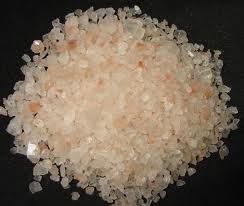
What is correct is that we should avoid highly processed foods containing large amounts of this inorganic substance, try to buy your fresh produce from organic farms where they rotate the crops from paddock to paddock to give the soil time to regenerate or even better grow your own... Shop for unrefined, unprocessed salt – it should be pink or grey in colour (see figure 2) and get sprinkling on your eggs and meats...


Figure 2
 Enjoy!

Wednesday, October 10, 2012

Choc Coated Macadamias - By NoCheating! Recipes


Those of you on ketogenic or low carb recipes will really appreciate this little treat. Although they're both delicious and calorie-dense (a dangerous combination!), if you make a small amount and ration them amongst friends and family, you'll escape unharmed. Serve with your favourite UPS protein shake to balance the fats with a little more proteins.  This recipe would suit any high-fat, very low carbohydrate and glycogen depletion style diet. 

Serves 4

Ingredients:

80g of unsalted, natural macadamia nuts
20g of melted coconut butter
2 tablespoons of organic, unprocessed cacao powder
1 serve of UPS Ultimate Slim in Belgian Chocolate
Stevia to taste (optional)

Method:

Melt the coconut butter and leave to cool slightly before stirring in the cacao powder, stevia and protein powder.
Mix very well so that no chunks remain and the mixture is glossy and smooth and slightly warm to the touch (but not hot! This will destroy the texture of your coating and make the protein powder chalky and unusable).

Prepare a "production line" by setting up the bowl of chocolate coating, the macadamias and a serving plate on your bench.
Take an even amount (about 1/2 tablespoon should do) and while the mixture is still slightly warm, place the macadamia onto the spoon with the chocolate mixture and carefully remove with your hands before rolling the chocolate around the nut with your palms, similar to if you were making protein balls.

The best method is to slightly cup one hand and apply pressure with the other. This will ensure the coating is even. If the nuts are not completely covered, add a little more mixture until none of the nut is showing. Repeat process until all nuts are coated and refrigerate until the chocolate is set.

Variations:

-
Use more than one type of nut to make a "TV Mix" of cashews, brazil nuts and almonds
- If your energy density needs are very high due to an endurance event, hiking etc, add some dried fruit such as cranberries, apricots and mango slices

- You can use any flavour of protein with this recipe to make the coating - think of mixing it up with a little berrylicious or banana-coated freeze dried strawberries to make a "yoghurt" style coating
- Coat some high protein, low carb balls with the chocolate mixture before setting to make a chocolate truffle
- Use the nuts, truffles or chocolate coated dried fruit as garnishes or toppings for a high protein, low carb gateaux or torte for an anabolic topping on your favourite bodybuilders' birthday cake 


Nutritional info:

Calories: 246
Protein: 10.8g
Carbs: 2.6g (1.4g net)
Fat: 21.3g
Fibre: 1.2g
Sugar: 1.0g


Sunday, September 2, 2012

What is ROLFING Structual Intergration?

Rolfing® refers to a system of Structural Integration and manual themainrapy developed by Dr Ida Rolf over 50 years of study. It is an original and scientifically proven system of body restructuring and movement education, which releases the body from lifelong patterns of tension and bracing, and allows the force of gravity to realign the body's segments.

The Rolfing series is designed to uncover a structural ease and balance that is unique to each client. Rolfing cannot accurately be described as therapy or as a returning of the body to a "natural" state from which it has deteriorated. Rather, it is a process of education in which a Rolfer seeks to help a client discover the most efficient means of using his or her body, given the uniqueness of the individual.

What is the difference between Rolfing and Massage?

Rolfing Structural Integration is not a form of massage


One of the most common misconceptions about Rolfing SI is that it is a nothing more than a type of very deep massage. There are many varieties of massage, which are particularly effective for loosening tight tissue, reducing stress, detoxing the body and an increased feeling of relaxation and well-being. Since these benefits are also a byproduct of Rolfing SI, the general public experiences confusion as to the precise difference between our work and the proliferation of effective touch modalities currently available.

Rolfing SI balances the body in gravity


Ray McCall, a Certified Advanced Rolfer in Boulder and former student of Dr. Rolf, once said that what Rolfers™ do can be summed up in three words: palpation, discrimination and integration.
  • We palpate, or touch the tissue, feeling for imbalances in tissue texture, quality and temperature to determine where we need to work.
  • We discriminate, or separate fascial layers that adhere and muscles that have been pulled out of position by strain or injury.
  • Finally, we integrate the body, relating its segments in an improved relationship, bringing physical balance in the gravitational field.
Other soft-tissue manipulation methods, including massage, are quite good at the first two, but do not balance the body in gravity.

To schedule an appointment with Nicholas: 0400 001 477 or email: info@rolfingmelbourne.com.au